Shiloh Turner is an expert  on philanthropy. Vivian Chen is a Fulbright English Teaching Assistant. This spring, the two collaborated on an inspiring philanthropy project for students at Gymnázium Roudnice nad Labem. During the current spring semester, Shiloh teaches about the role of philanthropy in the nonprofit sector at the Faculty of Economics and Administration of Masaryk University in Brno. In the United States, she serves as the Principal of Executive Philanthropy Advisors in Cincinnati, Ohio. Vivian helps students at Gymnázium Roudnice nad Labem improve their spoken English and learn more about life in the United States. When Shiloh offered to organize a philanthropy workshop at one of the ETA host schools, Vivian eagerly volunteered her school to participate. Together, they created a one-day deep dive into philanthropy that encouraged students to think about generosity, civic engagement, and the impact individuals can have on their communities.

“No one has ever become poor by giving.”
It’s a simple idea—but one that proved surprisingly powerful in a classroom in Roudnice nad Labem.
It’s a simple idea—but one that proved surprisingly powerful in a classroom in Roudnice nad Labem.
Context and Collaboration
As part of my Fulbright experience in the Czech Republic, I have been teaching a university course on philanthropy at Masaryk University. Alongside that work, I was interested in exploring how these concepts might translate into a secondary school setting—and how collaboration with Fulbright English Teaching Assistants (ETAs) could extend the reach of this work.
Through that lens, I partnered with Fulbright ETA Vivian Chen to co-teach a youth philanthropy lesson at her host school in Roudnice nad Labem.
As part of my Fulbright experience in the Czech Republic, I have been teaching a university course on philanthropy at Masaryk University. Alongside that work, I was interested in exploring how these concepts might translate into a secondary school setting—and how collaboration with Fulbright English Teaching Assistants (ETAs) could extend the reach of this work.
Through that lens, I partnered with Fulbright ETA Vivian Chen to co-teach a youth philanthropy lesson at her host school in Roudnice nad Labem.
.jpg)
Photo: Roudnice nad Labem railway station, April 2026.
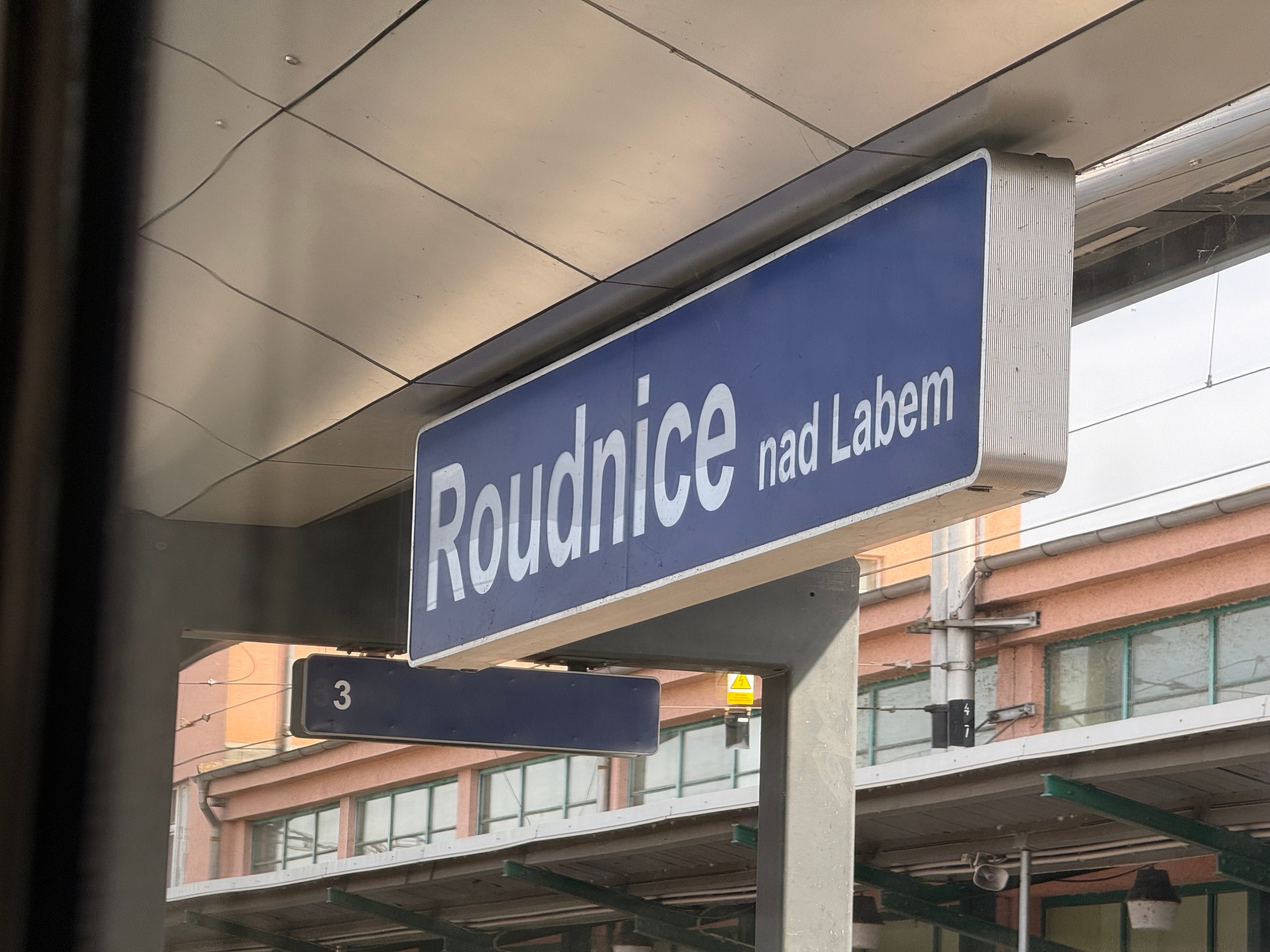
This collaboration brought together two complementary perspectives: a practitioner-focused approach to philanthropy and Vivian’s on-the-ground experience in a Czech classroom. It also created an opportunity to engage students in a structured, participatory exploration of giving, decision-making, and social impact.
Lesson Overview
We began with a simple question:
What is the best gift you’ve ever given or received?
Students quickly moved beyond material answers and into something deeper—stories of effort, thoughtfulness, and meaning. Baking something for someone they cared about. Writing a meaningful note. Creating a shared experience. The significance of a family heirloom.
The core idea—that generosity is defined by intention, not just money—landed almost immediately.
From there, students worked in teams to: (1) identify a social issue or cause they care about, (2) research an organization aligned with that cause, (3) evaluate the organization using a structured framework: a) mission and relevance to community, b) strategy and feasibility, c) leadership and trustworthiness, and d) evidence of learning and improvement.
The issues selected reflected both local and global awareness: environmental protection, domestic violence, global health, cancer research and treatment, and women’s rights.
Each team then developed and delivered a short pitch to their classmates. The exercise culminated in a collective decision: how to allocate a $100 grant.
.jpg)
Photo: Students research organizations to support, April 28, Roudnice nad Labem.
From Classroom to Action
This was not a hypothetical exercise.
The selected organization will receive a $100 grant, funded through my donor advised fund at the Greater Cincinnati Foundation.
Students ultimately chose to support the Czech Women’s Lobby (czlobby.cz) based on a compelling case centered on addressing domestic violence.
The thought of real money shifted the dynamic in an important way. Students were not simply discussing ideas—they were making a real funding decision with real resources.
It also created an opportunity to introduce the role of community foundations as flexible, globally oriented vehicles for giving.
While donor advised funds offer significant flexibility for charitable giving within the United States, this experience also highlighted some of the limitations that still exist around international grantmaking. Because my donor advised fund was unable to directly support the organization selected by the students, I pursued the grant support independently to ensure the class’s decision could still be honored.
It was a useful reminder that philanthropy is increasingly global in nature—and that our giving vehicles and systems are still evolving to meet that reality. I remain hopeful that philanthropy’s infrastructure will continue adapting in ways that make thoughtful international giving more accessible and responsive in the years ahead.
.jpg)
Outcomes and Observations
Students took the assignment seriously—producing thoughtful, well-structured analyses and engagement in each other’s presentations.
The voting process reinforced analytical thinking. Because students could not vote for their own project, they were required to assess their peers’ work objectively. They did.
The strength of the winning team’s argument—and the margin of the vote—reflected both clarity of thought and shared conviction.
More broadly, the session demonstrated that students are fully capable of engaging with complex social issues when given structure, expectations, and the opportunity to participate.
It also reinforced the value of experiential learning in introducing concepts such as philanthropy, civic responsibility, and resource allocation.
.jpg)
Reflections on Exchange
This experience underscored the potential of Fulbright collaborations to extend beyond traditional classroom boundaries.
For me, it offered a way to connect my professional work in philanthropy with a new educational context, while contributing in a tangible way to the local community.
It also reinforced how transferable these concepts are. Across cultures and age groups, the underlying ideas—generosity, responsibility, and informed decision-making—resonated clearly.

Vivian’s Perspective
Just as my students were learning about the spirit of generosity in this lesson, my Fulbright experience has also been a personal lesson on giving. Prior to this year, I had always believed that nothing in life comes free and that relationships work like a give-and-take. But serving as a Fulbright English Teaching Assistant (ETA) in the Czech Republic this year has helped me to understand what it truly means to give when we don’t expect in return, and how much of a real privilege it is to be in a position where we may give in this way.
Before working as a Fulbright ETA, I did not realize how much of a giving profession teaching is. Seeing the behind-the-scenes work of the colleagues at my host school, I learned that teachers give a lot of time, energy, and lifeblood to students, from planning field trips to grading stacks of tests, at times far outweighing the appreciation or compensation they might receive in return. Nonetheless, being a Czechia Fulbright ETA has to be one of the most meaningful jobs I have had in my career thus far. Whether it be bringing my English club to meet American teenagers at the US Embassy’s monthly conversation club or counseling a graduating student about their future plans, I have found it to be deeply rewarding how my role might introduce new perspectives to my Czech students and expand their ideas of what’s possible and attainable.

Photo: Vivian in front of her host school in Roudnice nad Labem, October 2025.
In addition to my classroom teaching responsibilities as an ETA, a side project that I worked on during my time at my host school was organizing events that could expose my students to international people, ideas, and possibilities. When the chance arose to do a guest lesson with Shiloh, I saw it as a fantastic opportunity for my Czech students to explore the value of generosity and meet a real American professional.
From the $100 given to the class to donate to the Viennese wafers offered to each student as a reward, I loved how the guest lesson with Shiloh modeled generosity, which, for a country like the Czech Republic still rebuilding from a Communist system, might have been a nascent value for some in the room. It was also rewarding to see my students being challenged by Shiloh’s presence, like when she asked them to pitch in front of the class and share their personal opinions (See? It’s not just me!).
Experiences like the guest lesson with Shiloh are just one example of what I believe makes the Fulbright program so worthwhile, both for grantees and their host communities. My time on Fulbright and the connections I shared with the people in my host town are gifts that I trust will keep on giving, not just for myself personally and professionally, but also for my students, colleagues, and their families whose lives we each touched.
At the end of the day, I only have gratitude to have been able to participate in this exchange, and to be in a position where I might be able to give to others just a fraction of the help and privilege I received to have been granted this truly incredible and transformational experience in the Czech Republic.
.jpg)
Closing
This was a single lesson, with a modest grant.
At the same time, it reflects a broader goal of the Fulbright program: creating meaningful exchanges that bring together different perspectives, disciplines, and approaches to learning—and translating those exchanges into real-world action.
In this case, that action took the form of a student-led funding decision, connecting a classroom in the Czech Republic to a global nonprofit through a U.S.-based community foundation.
It is also a reminder that the tools of philanthropy—when placed in the hands of young people—can move quickly from theory to practice.
This was a single lesson, with a modest grant.
At the same time, it reflects a broader goal of the Fulbright program: creating meaningful exchanges that bring together different perspectives, disciplines, and approaches to learning—and translating those exchanges into real-world action.
In this case, that action took the form of a student-led funding decision, connecting a classroom in the Czech Republic to a global nonprofit through a U.S.-based community foundation.
It is also a reminder that the tools of philanthropy—when placed in the hands of young people—can move quickly from theory to practice.
Note: This text was originally published on May 7, 2026, on Shiloh Turner's blog "Dobrý den, Brno." The post was reprinted here with the permission of both authors.